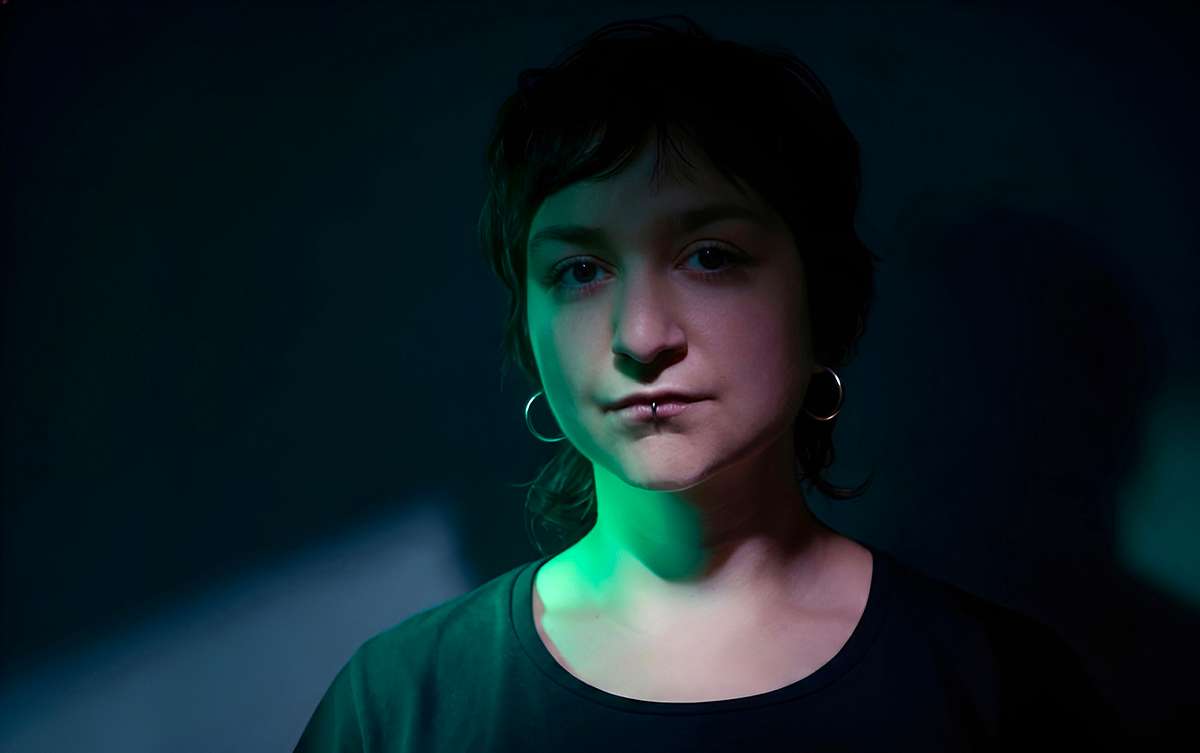
About me /
Camilla Gurgone (Lucca, 1997) is a visual artist based in Milan. She graduated in Sculpture from RUFA – Rome University of Fine Arts in 2020, during which she received a research grant to study at the University of the Basque Country (UPV/EHU) in Bilbao. In 2024, she completed her MA in Visual Arts and Curatorial Studies at NABA – Nuova Accademia di Belle Arti in Milan.
Since 2022, she has been a member of the curatorial and organizational collective of spazioSERRA (Milan), and since 2024, she has been represented by Viasaterna Gallery (Milan). In 2024, she was named "Best Young Italian Artist" by Artribune. In 2025, she was included in Forbes Italia’s “100 Under 30” list, and in 2026, she won the 25th Premio Cairo.
About my work /
My research examines how the transformations shaping the present affect individual and collective experience, altering our perception of time, our relationship with work, the construction of memory and identity, and the ways we communicate and relate to one another. I am interested in what happens when these changes reach a perceptual and affective dimension, influencing how we remember, desire, interpret what happens to us, and form relationships with others. Acceleration, constant availability, and technological mediation are part of this process, alongside the tensions between personal experience and collective models, between the possibility of control and the need to entrust ourselves to what we cannot determine.
Installations, performances, and site-specific and participatory interventions engage with the conventions that shape everyday experience, introducing alterations, delays, and shifts in the ways we make sense of what we live through. Technology intervenes in this process by transforming languages, temporalities, and forms of shared experience, while waiting, error, deterioration, loss, misunderstanding, and imagination take on a productive role.
My work thus focuses on the space that remains open between the structures through which we organise and interpret reality and the complexity of human experience, bringing to the surface what cannot easily be predicted, measured, or rendered in a stable form.
Relationships run through my practice as an unstable condition, exposed to distance, interpretation, availability, and the possibility of failure. An encounter may take place without reciprocity, unfold across different temporalities, depend on an unaware presence, or continue beyond the moment in which it was initiated. The position of the viewer also remains fluid and may become decisive without their involvement necessarily being explicit or intentional.
Memory, perception, and relationships therefore remain open processes, capable of producing meanings that exceed the conditions from which they emerged.